After the devastating NSW floods in March and the catastrophic bushfires of 2019/20, the impacts of climate change are coming into sharper focus in Australia. While the evidence of man-made climate change being linked to larger flooding is not as strong as the links to more intense bushfires, we do know climate change will lead to more extreme weather events.
Climate change will impact many parts of Australian society – including the economy and the ASX. Motley Fool Australia talked to Nicki Hutley, an economist with the Climate Council of Australia, to understand the impact climate change will have on the Australian economy.
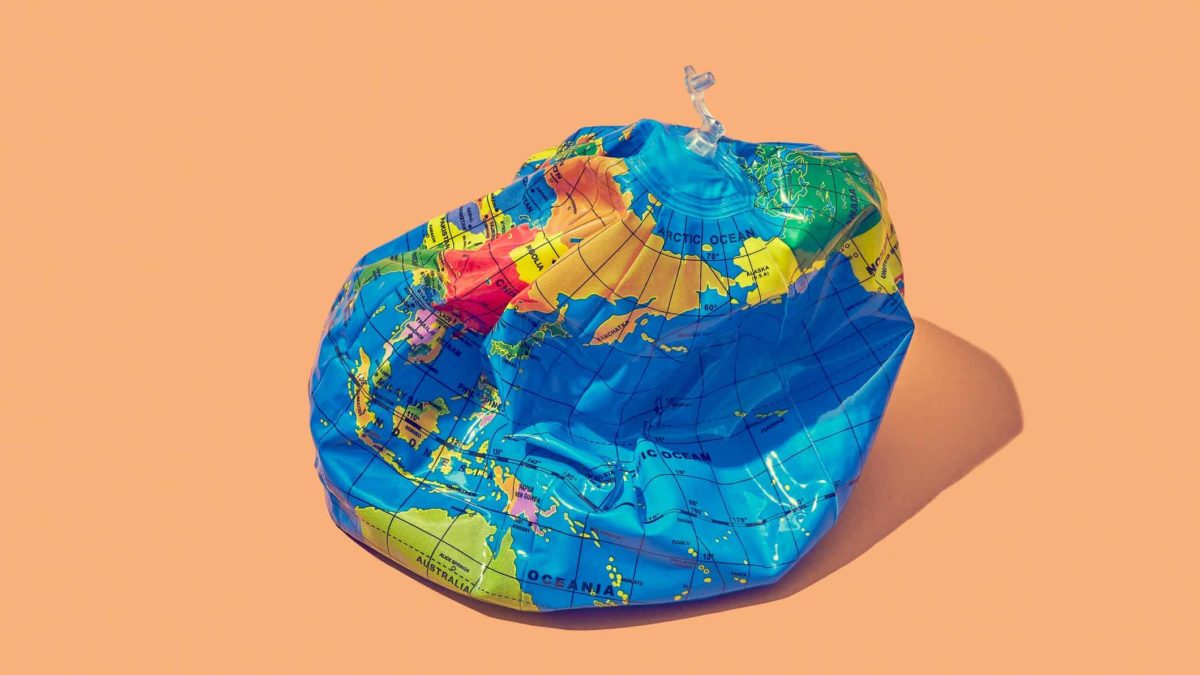
Image source: Getty Images
What climate change might mean for your ASX shares
The following is an excerpt of an interview conducted with Hutley. It has been edited for clarity and readability.
Motley Fool: In light of the recent natural disasters to hit Australia, what does climate change mean for business?
Nicki Hutley: First off, we need to think about climate change in two ways. The first way is extreme events, such as fires, tornados, cyclones, and maybe flooding. We know climate-change is linked to more intense extreme weather events. Even with flooding, we do know more water is being held in the atmosphere due to climate change, so it is possible we will continue to see extreme flooding because of climate change. In Australia though, the main issue will be length and severity of drought.
That leads on to the second way to think about climate change – rising temperatures. The last 2 decades were the 2 hottest decades on record. That will continue into the coming decade.
If nothing is done to mitigate its effects, we will see a COVID sized shock to the economy every year by 2070.
MF: So, what does that mean for the agricultural and tourism sectors? In my mind, those are the two that would be impacted the most.
NH: They aren't the only ones that would be affected. Construction, mining, and manufacturing would all be hit by rising temperatures (making it impossible to work outside) and by more extreme weather (supply chains shut down, work stoppages, lower productivity).
But in terms of tourism and agriculture, they would be hit fairly hard by climate change, especially in Australia. Tourism makes up 3% of the Australian economy and pre-coronavirus, it was growing at a faster rate than the economy as a whole. Agriculture makes up 2% of the Australian economy and is vital for exports and for our own food security.
MF: Alright, so tell me about tourism and climate change.
NH: Rising temperatures will make it impossible to visit some of Australia's iconic locations, like Uluru and Kakadu National Park. Coral bleaching is already rife and will continue to be in the Great Barrier Reef, we will see more lose in our biodiversity.
MF: Would Australian tourism be more impacted by climate change than other countries?
NH: More than likely, yes. Compared to other developed countries, a higher proportion of people visit Australia for natural sights than for culture. Even cities like Sydney and Melbourne, where people would visit for cultural reasons, would see less people visit if it's too hot.
Australia is extremely exposed to climate change. We are 7x more vulnerable to its effects than other developed nations. Even international events would be impacted. The Australian Open, for example, could not be played in January.
Rising sea levels will have a devastating impact on coastal communities that rely on tourism, as well.
MF: How about agriculture?
NH: We're already starting to see climate change impacting the agricultural sector. Take wine, for example. Producers have had to move their vineyards further and further south to accommodate warming temperature. But how much more south can they go? Once they reach the bottom of Tasmania, that's it.
The amount of arable land will shrink, both inland and near the coast. Inland due to extreme drought and on the coast due to coastal erosion caused by rising sea levels.
Extreme events will impact both food security and food prices. The millennium drought, for example, saw the price of fruit increase by 43% on average.
What can industry and government do?
MF: Is it too late?
NH: Yes, but it's not all doom and gloom. If we can make changes, the situation could be salvageable. We saw what happened with the COVID vaccine. When the pandemic started, people thought it would take years before a vaccine could be developed. Intense government and private funding, as well as time and effort, saw a vaccine being made in less than a year.
The best-case scenario, at the moment, is looking at global average temperature increase of 1.5C, as opposed to 1.8-2C.
MF: What's the difference between 1.5C and 2C?
NH: It's not just the temperature being hotter, and it isn't spread evenly. Look at the difference now between Penrith and the Sydney CBD on a hot summer's day. We know, for example, the proportion of people exposed to 3 consecutive days of 35C or more increases from 14% – 37%.
Of course, higher temperatures mean more intense and prolonged drought, and more bushfires. We know the devasting impacts that can have on people and the economy.
During the 2019/20 bushfires, we saw more ED admissions, more ambulance call outs, more respiratory issues and more underweight pregnancies. That impacts productivity in the economy if more people are sick and getting sick because of the climate.
MF: What industries are going in the right direction?
NH: At an industry-by-industry level, we aren't seeing much action on climate change. There are definitely individual companies [taking action] but not industries as a whole.
For example, many companies are adopting net-zero emission targets by 2050. Many though, aren't on track even for that modest goal. We see a lot of mining companies researching carbon capture and storage, as well as green hydrogen, and that's a good thing.
Businesses within the agricultural industry, actually, are looking at ways they can both mitigate from climate change and what the industry is doing to influence climate change.
If I were to pick a whole industry, it would be insurance and finance. They are at the forefront of understanding and calculating the risks of climate change, and how it can impact them.
MF: What about government?
NH: We are seeing great results on a state level but not at a federal one. South Australia, for example, is leading the way in renewable energy, and renewable energy power storage.
The federal government continues to take active steps in the wrong direction. Its subsiding fossil fuels and talks about building coal-fired and gas-fired power stations. It's causing uncertainty in the market. If it just stopped doing its negative actions and just did nothing, it would be better, but it wouldn't be enough.
We need more investment in our green infrastructure. European nations used COVID stimulus to fund green energy projects. Australia did not. Not just power sources, but the distribution and transmission of green energy.
Tackling climate change doesn't have to be a net job loss. Nearly 50% of all Australian jobs are climate related. The costs of not doing anything are already outweighing the costs of doing something.